

Vista In the Pearl District Getting off the Ground
July 2, 2026Your First Home Might Be a Condo

For many first-time buyers, the dream of owning a home has not disappeared. It has simply become harder to see how the numbers are supposed to work.
Home prices remain high, mortgage rates continue to affect monthly payments, and detached houses in many Portland-area neighborhoods may sit beyond a new buyer’s comfortable budget. But buying a home does not always have to mean purchasing a traditional house with a large yard, multiple spare bedrooms, and responsibility for every inch of the property.
Sometimes the most realistic way into the market is to reconsider the type of home you are searching for.
A condo, loft, or townhome can provide many of the benefits of ownership at a lower entry price. And in 2026, buyers have two especially compelling reasons to explore these options: there are more attached homes available, and they continue to sell for substantially less than single-family houses nationally.
For Portland buyers, that combination may create an opportunity to purchase sooner, live closer to the neighborhoods they enjoy, and begin building equity without stretching their budget to the breaking point.
Condo and Townhome Inventory Is at a 10-Year High
A few years ago, buyers had very little to choose from.
National condo and townhome inventory fell dramatically during the pandemic-era housing market. In June 2022, only 101,415 condos and townhomes were listed for sale nationwide.
By June 2026, that number had grown to 233,030 available homes, the highest June inventory recorded in at least a decade and more than twice the level seen four years earlier.
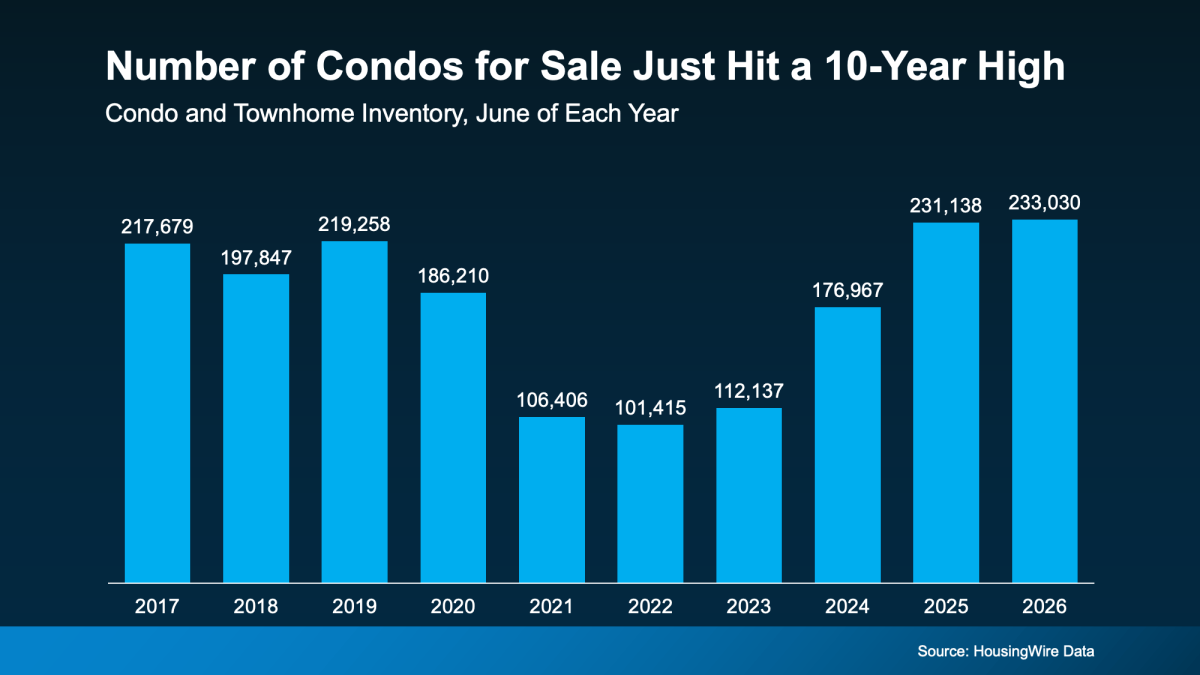
The change becomes especially clear when looking at the recent inventory totals:
- June 2022: 101,415
- June 2023: 112,137
- June 2024: 176,967
- June 2025: 231,138
- June 2026: 233,030
That represents an increase of nearly 130% since June 2022.
These are national numbers, and every local market behaves differently. Portland does not move in perfect alignment with other cities or regions. But the broader trend matters because it shows how much the attached-home market has changed.
More inventory may give buyers:
- A larger selection of homes and communities
- More time to compare options
- Less pressure to make an immediate decision
- Greater leverage during negotiations
- More opportunities to request repairs or credits
- A better chance of finding the right combination of price, location, and amenities
A few years ago, a buyer might have had to choose between moving quickly or losing the property. Today, some buyers have more room to investigate the building, review the homeowners association, compare monthly costs, and make a thoughtful decision.
That additional time is particularly valuable when purchasing a condo because buyers are evaluating more than the individual unit. They are also buying into a shared building or community.
Condos Continue To Offer a Lower Entry Price
The second major opportunity is the price difference between condos and detached homes.
According to the National Association of REALTORS®, the national median sales price for an existing condominium or co-op was $380,000 in June 2026. The median price for a single-family home was $446,400. That is a difference of $66,400, or approximately 15%.
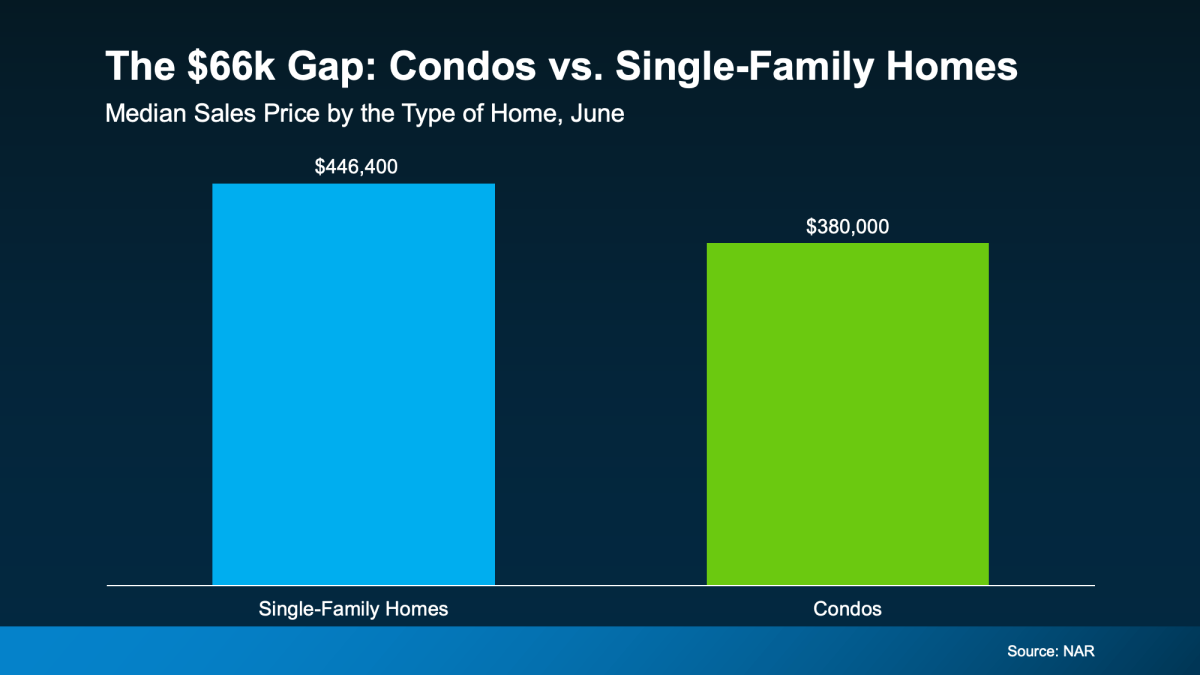
A $66,400 difference is significant, especially for a first-time buyer.
A lower purchase price may result in:
- A smaller required down payment
- A lower loan balance
- A more manageable monthly mortgage payment
- Less cash needed at closing
- Additional savings left over after the purchase
- Access to a neighborhood that would otherwise be unaffordable
Of course, the price of the home is only one part of the monthly expense. Condo buyers must also account for HOA dues, insurance, property taxes, and the association’s overall financial condition.
Still, for buyers who do not need a large property, paying more for additional land and square footage may not be the best use of their budget.
A smaller home in the right location can sometimes create a much better quality of life than a larger home that requires an uncomfortable payment, a longer commute, or more maintenance than the buyer wants to take on.
Why Attached Homes Make Sense in Portland
Portland has an unusually varied selection of condos, lofts, and townhomes.
Depending on the location and lifestyle you prefer, you may find:
- Historic lofts in converted warehouses
- High-rise condos with skyline or river views
- Modern buildings near restaurants and transit
- Courtyard-style condo communities
- Townhomes with private garages and outdoor space
- One-level condos suited to buyers who want fewer stairs
- Riverfront and waterfront communities
- Newer rowhomes in walkable neighborhoods
- Suburban condo communities with pools, fitness centers, or green space
That variety makes attached housing relevant to far more than one type of buyer.
A downtown studio may work well for someone who prioritizes location and simplicity. A multi-level townhome with a garage may appeal to someone who wants additional space but does not need a detached yard. A one-level condo in Beaverton, Tigard, Lake Oswego, or Vancouver may suit a buyer who wants easier maintenance and access to suburban conveniences.
Buyers can use Portland Condomania to explore Portland condos and townhomes currently for sale, compare individual communities, and narrow the search by location or property style. Listings on the site are updated throughout the day, helping buyers see how many different forms of attached ownership are available across the region.
The biggest mistake may be beginning a search with the assumption that every attached home offers the same experience. A downtown high-rise condo, a townhouse-style condo, and a fee-simple townhome can have very different costs, responsibilities, rules, and lifestyles.
The goal is not simply to decide whether you like condos. It is to determine which type of attached home fits you.
What Is the Difference Between a Condo and a Townhome?
“Condo” and “townhome” are often treated as interchangeable terms, but they do not necessarily mean the same thing.
A condominium is primarily a legal form of ownership. A townhome generally describes the physical style of a home.
That means a property can look like a traditional townhome while legally being organized as a condominium.
Condominium ownership
When purchasing a typical condo, you generally own the interior of your individual unit and share ownership or use of the building’s common elements.
Depending on the community, the homeowners association may be responsible for:
- The roof
- Exterior siding
- Hallways and elevators
- Landscaping
- Shared plumbing or mechanical systems
- Parking facilities
- Private streets
- Recreational amenities
- Exterior insurance
Your precise ownership and maintenance responsibilities will be defined in the condominium declaration, bylaws, rules, and other association documents.
Fee-simple townhome ownership
With a fee-simple townhome, the owner may own both the structure and the land beneath it, much like a detached house.
The property may still belong to an HOA, and owners may share walls, private roads, landscaping, or common facilities. However, the individual homeowner may be responsible for more exterior maintenance than they would be in a condominium community.
Townhomes can be found throughout the Portland area, from close-in neighborhoods to Beaverton, Hillsboro, Tigard, Tualatin, Lake Oswego, Gresham, and Vancouver. They often provide a useful middle ground between a condo and a detached house: more living space and privacy than many condos, but generally less land and maintenance than a traditional house. You can browse Portland-area townhomes for sale here.
Detached single-family ownership
With a detached home, you generally own the house and the land it occupies. You typically have more privacy and control, but you are also responsible for nearly all repairs and maintenance.
The right choice depends on your priorities. Some buyers value maximum control and private outdoor space. Others prefer the lower maintenance, shared expenses, amenities, or location that an attached home can provide.
Do Not Judge an HOA Only by Its Monthly Dues
One of the first numbers condo buyers notice is the HOA fee.
That is understandable. HOA dues are part of the buyer’s recurring housing expense and must be included when determining what is affordable.
But comparing associations based only on which one has the lowest dues can be misleading.
One association may charge $300 per month and cover only basic landscaping and common-area maintenance. Another may charge $600 but include water, sewer, garbage, exterior maintenance, roof reserves, building insurance, security, and recreational amenities.
A higher HOA fee is not automatically bad, just as a low fee is not automatically good.
The better questions are:
- What do the monthly dues cover?
- How much is being contributed to reserves?
- Are the dues sufficient for the building’s actual expenses?
- Have dues increased regularly or remained artificially low?
- Are major repairs approaching?
- Is the association financially prepared for them?
A detached homeowner also pays for roof replacement, siding, landscaping, drainage, exterior insurance, and other maintenance. Those expenses simply arrive individually and often unpredictably.
In a condo, many of those costs may be collected and managed collectively through the association.
What To Review Before Buying a Condo
A condo purchase involves another layer of due diligence beyond inspecting the unit itself.
The kitchen, flooring, view, and floor plan are important, but so are the financial health of the association and the physical condition of the overall property.
Buyers should investigate the following areas before completing a purchase.
The association budget
The budget shows how the association collects and spends money.
Review the major operating expenses, expected income, maintenance costs, insurance premiums, reserve contributions, and owner delinquencies. The goal is to understand whether the community appears to be operating on a financially sustainable basis.
Reserve funds and reserve studies
Reserves are funds set aside for major future repairs and replacements.
Depending on the property, they may be used for:
- Roof replacement
- Exterior painting or siding
- Elevators
- Plumbing systems
- Paving
- Decks and balconies
- Windows
- Drainage
- Mechanical equipment
A reserve study may estimate the remaining useful life of major components, the anticipated replacement cost, and how much the association should save each year.
Low reserves do not automatically make a property a bad purchase. But buyers should understand how upcoming work will be paid for.
Special assessments
A special assessment is an additional amount charged to homeowners when the association needs money beyond its regular dues and reserves.
Assessments may fund major repairs, insurance deductibles, structural work, exterior projects, or unexpected expenses.
Ask whether any special assessments have been:
- Approved
- Proposed
- Discussed
- Recently completed
- Deferred to a future year
Buyers should also clarify whether the seller or buyer will be responsible for any current assessment as part of the purchase agreement.
Board and association meeting minutes
Meeting minutes can reveal concerns that may not be visible during a showing.
They might include discussions about water intrusion, roof leaks, insurance costs, noisy neighbors, security, litigation, maintenance projects, rental restrictions, pet complaints, parking problems, or future assessments.
Every community experiences issues from time to time. The important question is whether the association recognizes those issues and responds responsibly.
Governing documents and community rules
Review the declaration, bylaws, rules, maintenance responsibilities, and any amendments.
Pay particular attention to regulations involving:
- Pets
- Rentals
- Short-term rentals
- Parking
- Storage
- Smoking
- Flooring
- Noise
- Renovations
- Balconies and patios
- Electric vehicle chargers
- Move-in procedures
A financially healthy building may still be the wrong fit when its rules do not align with your needs.
Condo Insurance Deserves Extra Attention
Condo insurance can be more complicated than insurance for a detached house because responsibility is divided between the association’s master policy and the individual owner’s policy.
The association’s master policy may cover portions of the building, exterior, common areas, or original construction. The owner’s individual policy may cover personal belongings, interior improvements, liability, temporary living expenses, and areas not insured by the association.
The exact division varies by community.
Before purchasing, buyers should confirm:
- What the master policy covers
- The amount of the master-policy deductible
- Whether the association has adequate replacement-cost coverage
- Whether there are exclusions for water, earthquake, or other risks
- What individual policy the lender requires
- Whether special loss-assessment coverage is recommended
Insurance should be investigated early, not treated as a final closing task. Coverage availability, premiums, and deductibles can affect both affordability and loan approval.
Financing a Condo Can Be Different From Financing a House
When financing a detached home, the lender primarily evaluates the buyer and the property.
For a condo purchase, the lender may also need to evaluate the condominium project.
Depending on the loan program, the review may consider:
- The association’s insurance
- Owner-occupancy levels
- Delinquent HOA dues
- Commercial space within the project
- Pending litigation
- Deferred maintenance
- Structural concerns
- Reserve funding
- The number of units owned by a single entity
- Rental concentration
This is commonly referred to as determining whether a condo project is eligible or “warrantable” under the lender’s loan program.
FHA financing may be available in approved condominium projects. Certain units in communities without full project approval may also qualify through FHA’s Single-Unit Approval process, provided the project and unit meet applicable requirements.
This is why condo buyers should work with a lender who understands project reviews and attached-home financing.
A unit can be beautiful, well-priced, and seemingly perfect but still present financing complications because of an issue elsewhere in the project. Identifying those concerns early can prevent wasted time, unexpected costs, and disappointment.
A Condo Can Be a First Home Without Being a Forever Home
Some first-time buyers place enormous pressure on their first purchase.
They want it to provide enough space for every possible future need, accommodate a lifestyle they may have ten years from now, and perform as the perfect long-term investment.
That is a difficult standard for any property to meet.
A first home does not necessarily need to be a forever home. It needs to fit your current life, remain financially manageable, and make sense for the amount of time you expect to own it.
A carefully selected condo or townhome may allow a buyer to:
- Begin building equity
- Establish a history of mortgage payments
- Gain experience as a homeowner
- Live in a preferred location
- Avoid taking on excessive maintenance
- Preserve savings after closing
- Build a foundation for a future move
No property is guaranteed to appreciate, and buying should never be based solely on the assumption that prices will rise. Buyers should consider their expected ownership timeline, total monthly cost, potential resale audience, and ability to handle future expenses.
Still, waiting for the perfect detached house is not always the only sensible strategy. For some buyers, starting with a smaller attached home may be a more practical step toward their long-term goals.
Who Should Consider a Condo or Townhome?
An attached home may be a strong fit for buyers who:
- Want to live closer to Portland’s restaurants, shops, parks, or transit
- Prefer less exterior maintenance
- Do not need a large yard
- Travel frequently
- Want a lower initial purchase price
- Value amenities such as secured parking, a gym, pool, or community room
- Need fewer bedrooms than a typical detached house provides
- Would rather share major exterior expenses
- Want to begin building equity without using their maximum budget
A condo or townhome may be less appealing to someone who wants complete control over the exterior, needs extensive private outdoor space, owns pets that do not meet association rules, or strongly prefers not to live within an HOA.
There is no universally better type of home. The right choice is the one that supports your budget and the way you actually want to live.
More Inventory Does Not Mean Every Condo Is a Good Deal
The increase in available condos and townhomes is encouraging, but buyers should still be selective.
Some properties may be sitting on the market because buyers have more choices. Others may have high HOA dues, pending assessments, insurance concerns, financing limitations, deferred maintenance, restrictive rules, or features that reduce their resale appeal.
A longer market time does not automatically make a condo a bad property. It may create a negotiating opportunity. But buyers need to understand why the home has not sold and whether the price accurately reflects its risks and benefits.
When comparing attached homes, look beyond the finishes and consider:
- Purchase price
- Total monthly payment
- HOA dues and inclusions
- Reserve strength
- Building condition
- Upcoming repairs
- Insurance coverage
- Financing eligibility
- Parking and storage
- Noise and location within the community
- Rental restrictions
- Resale potential
- Long-term lifestyle fit
Portland Condomania is designed to make the beginning of that comparison easier. You can search Portland-area communities, explore different buildings and neighborhoods, and see current condos, lofts, and townhomes in one place.
From there, a knowledgeable local agent can help you investigate the pieces that are not visible in the listing photos.
The Bottom Line
Feeling priced out of a detached house does not necessarily mean you are priced out of homeownership.
In June 2026, the national median condo price was $66,400 below the median single-family home price. At the same time, the number of condos and townhomes available nationwide reached its highest June level in at least ten years.
For buyers, that may mean more choices, less pressure, greater negotiating room, and a lower entry point into ownership.
The right condo or townhome can offer much more than a smaller price tag. It can provide access to a preferred neighborhood, reduce exterior maintenance, create a more manageable monthly expense, and help a first-time buyer begin building a long-term financial foundation.
The key is to evaluate the complete purchase: not only the unit, but also the HOA, building, insurance, financing, monthly expenses, and future plans.
Start by exploring the condos, lofts, townhomes, buildings, and communities available throughout Portland Condomania. Once you find a few possibilities, connect with our local team so we can help you compare the true cost of ownership, understand the association, and determine which home is the strongest fit.
Because the path into the Portland market may not require spending more.
It may simply require searching differently.
$380,000 for condos, a difference of $66,400.